Self-Myofascial Release – Are You Rolling Regularly?
Fascia is the soft tissue segment of connective tissue that protects and supports many of the body’s structures (i.e., muscle) and this soft tissue may be restricted by overuse, trauma, and sedentary behaviors. This may lead to compression and compacting, dehydration and create limited blood flow within the fascia and muscle, resulting in discomfort and limited mobility. Consider self-myofascial release (i.e., SMR – myo= muscle; fascial = fascia) as a therapeutic process which may lead to a break-down of the fascial density and result in improved muscle mobility.
The foam roller is one of many SMR tools (i.e., balls of various sizes/densities, The Stick and Quad Baller are excellent as well) used to perform SMR and is the one that I often recommend. Deep-tissue massage therapy when time and money permits may also be very helpful. However, day-to-day, utilizing the foam roller prior to your workout and prior to your stretching segment at the end of your workout, may be an effective SMR strategy.
It should be noted that SMR may not be recommended for certain special populations such as those diagnosed with fibromyalgia and osteoporosis. However, the vast majority of clients are able to perform SMR and experience many of the improved performance/mobility benefits that SMR may offer. Below are several guidelines to follow when performing SMR which will be highlighted this week. As always, prior to beginning any exercise program, please consult your physician.
SMR Guideline #1
Learn how to perform SMR (referred to as “foam rolling or rolling” below) correctly before attempting this form of therapy. Roll across the tissue, five-ten times. More is not necessarily better. Over-rolling may create serious soreness at the rolled sites which is counterproductive (i.e., Check out “Pure Stretch” on my YouTube channel at Lakewood Fitness and click on “videos.” You may need to scroll/search a bit as there are over 100 videos on that channel!). However, this video includes warm-up, a 20-minute foam rolling program followed by a 40-minute full body flexibility and stretching segment! This is an excellent way to learn the proper use of the foam roller).
SMR Guideline #2
You may roll several times per day, every day. As mentioned above, rolling prior to your workout is an excellent method of breaking down the density of the fascia and mobilizing the muscles prior to your workout which may lead to enhanced performance levels. Following your workout, right before you perform static stretching to improve flexibility, is another optimal time to roll.
SMR Guideline #3
Roll only soft tissue, never bone, tendon or other connective tissue and that includes the IT Band. Consequently, when rolling the calf muscles, for example, you would avoid the Achilles tendon or the area located behind the knee joint (i.e., popliteal space) due to the vulnerability of the tissue. If the position does not feel right, re-position immediately.
SMR Guideline #4
If it hurts, don’t do it! Roll to a point of tolerance, never pain.
SMR Guideline #5
Breathe rhythmically throughout the rolling process, avoid holding your breath, even when the pressure increases, and breathe through and with the rolling action.
SMR Guideline #6
Choose a floor surface and area which is safe, not slippery and is comfortable when you are prone, or use an exercise mat in those prone positions where your knees or elbows may come into contact with a hard surface.
SMR Guideline #8
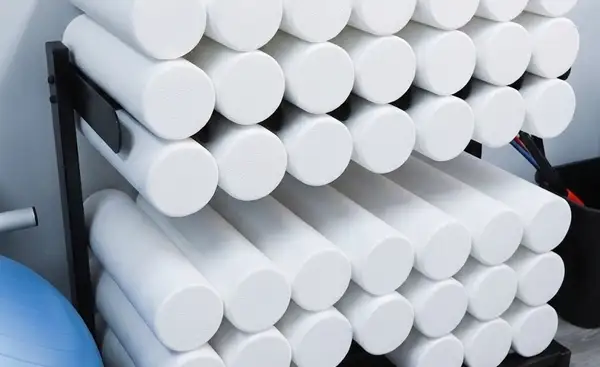
Various lengths and densities of foam rollers are available. I recommend the six-foot length for most clients. Begin with the lightest density. If you tolerate the light density easily, you may be a candidate for heavier density down the road. Average cost – $20.00. Alternatively, The Stick roller is portable, allows the user to apply appropriate pressure at each SMR site (i.e. when lying on a foam roller gravity may create too much pressure for some folks and, even those that are able to utilize the foam roller in general, may not be able to tolerate the pressure in certain positions). Consequently, The Stick may be purchased on Amazon and costs approximately $45.00. I use both of these tools in my practice every day!
By: Jackie Wright, Owner/Manager Lakewood Fitness